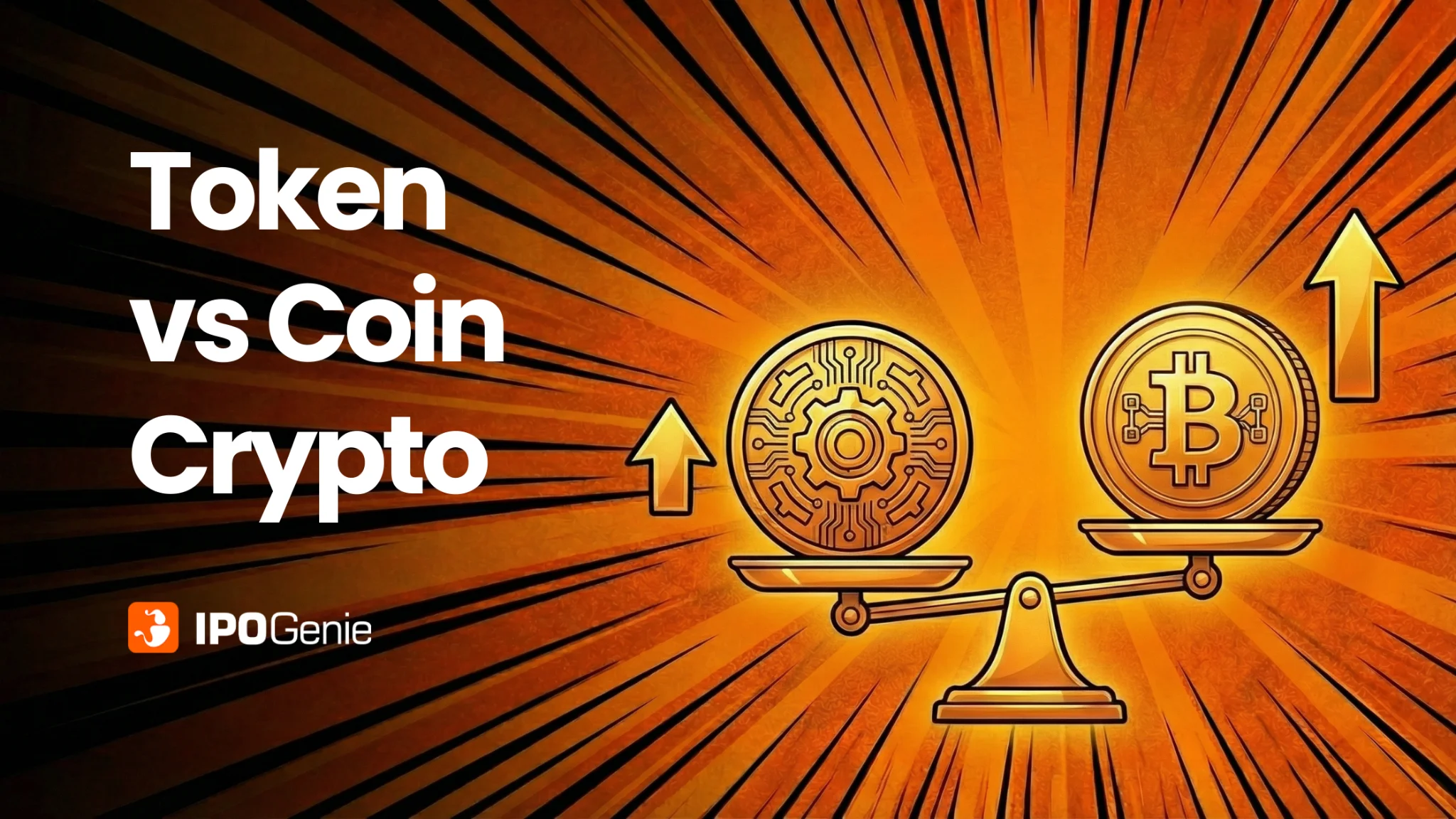
If you're just starting to explore cryptocurrency, you may have heard people talking about tokens and coins. At first, it might seem like they are the same thing, but in crypto, they are very different. Understanding the difference between a coin and a token is one of the first steps to navigating the world of digital money.
Think of it like this: a coin is like the official money of a country, while a token is more like a gift card you can use in that country. Both have value, but they serve different purposes. This article will explain everything in simple terms, using real examples like Bitcoin and NFTs, so you can understand cryptocurrency from the ground up.
What Is a Coin?
A coin is a type of cryptocurrency that runs on its own blockchain. A blockchain is like a digital ledger that records every transaction safely and transparently. Coins are the backbone of crypto and act like money you can spend, save, or trade.
Example: Bitcoin (BTC) is the most well-known coin. It runs on the Bitcoin blockchain and can be used as digital money. You can send it to someone, receive it, or hold it as a store of value, like digital gold. Other examples of coins include Ethereum (ETH), Litecoin (LTC), and Bitcoin Cash (BCH).
These coins have their own networks, rules, and sometimes even their own "fuel." For instance, Ethereum is used to pay for running applications on its network.
Key Features of Coins
- Own blockchain: Coins operate independently.
- Store of value: You can hold them for long-term growth, similar to saving gold.
- Medium of exchange: Coins are made to pay for goods or services.
- Security: Coins rely on strong algorithms, verified by miners or validators, to keep transactions safe.
Because of their independence, security, and sometimes limited supply, coins like Bitcoin are often called the gold standard of crypto.
What Is a Token?
Tokens are different because they do not have their own blockchain. Instead, they exist on top of another blockchain. Most tokens are built on platforms like Ethereum using smart contracts, which are small programs that automatically execute rules when certain conditions are met.
Tokens can represent many things depending on their token utility:
- Voting rights in a decentralized network
- Access to a service or application
- Ownership of digital or even real-world assets
Think of a token like a gift card in a store. You can use it to buy things inside the store, but the store itself relies on the official currency for transactions.
Key Features of Tokens
- Built on an existing blockchain: Tokens are easier to create than coins.
- Versatile use: Tokens can represent ownership, access, or voting rights.
- Dependent on coins for fees: For example, if a token is on Ethereum, you need ETH to pay network fees.
Example: Coin vs Token Explained
Imagine a country called "Cryptoland." Its official money is Bitcoin. You can buy, sell, or save it like real money.
Now, imagine a theme park inside Cryptoland. You buy a ticket to ride the attractions — this ticket is like a token. It can be used to enjoy rides and games inside the park, but the park still relies on Cryptoland's official money to manage operations.
So simply:
- Coins = country money (Bitcoin)
- Tokens = tickets or gift cards
This analogy makes the crypto token vs coin meaning much easier to understand.
How Coins and Tokens Are Made
Coins are created using complex methods like:
- Mining (Proof of Work): Computers solve difficult math problems to confirm transactions.
- Staking (Proof of Stake): Users lock up coins to help validate transactions and earn rewards.
Tokens are simpler to create. Developers write a smart contract on a platform like Ethereum or NEO. This contract defines how the token works and what it represents. That's why launching a token is faster and more flexible than creating a coin.
Use Cases: Coin vs Token Explained
Both coins and tokens have real-world uses, but they serve different purposes.
Coins
| Use Case | Explanation |
|---|---|
| Store of value | Coins like Bitcoin can be held like digital gold. |
| Digital cash | Coins can pay for goods or services. |
| International transfers | Coins allow faster, cheaper global payments. |
Tokens
| Use Case | Explanation |
|---|---|
| Smart contracts | Tokens can run automated contracts on blockchain platforms. |
| Decentralized apps (dApps) | Tokens power applications like blockchain games or lending platforms. |
| Access & rewards | Tokens can give access to services or reward users for participation. |
Tokens are more flexible than coins because they can represent ownership, participation, or even access to digital ecosystems — not just act as money.
Types of Tokens
There are different types of crypto tokens, each with a unique purpose:
1. Utility Tokens
- What they are: Give holders access to a product or service.
- Why it matters: Like a membership card or ticket, it allows you to use a platform, not hold it as money.
2. Security Tokens
- What they are: Represent an investment in a project, similar to owning shares of a company.
- Why it matters: Security tokens are regulated and give holders a claim to profits or governance rights.
3. Governance Tokens
- What they are: Allow holders to vote on project decisions.
- Why it matters: They give you a say in how a decentralized network is run.
4. Reward Tokens
- What they are: Given for participating in a network or completing tasks.
- Why it matters: They encourage activity and loyalty in the platform ecosystem.
5. Asset Tokens
- What they are: Represent ownership of real-world assets like gold, real estate, or art.
- Why it matters: Asset tokens make it easier to buy, sell, or trade traditionally hard-to-access investments digitally.
6. Non-Fungible Tokens (NFTs)
- What they are: Unique tokens that cannot be replaced by another, representing digital art, collectibles, or special items.
- Why it matters: NFTs allow creators to sell one-of-a-kind digital assets and buyers to own proof of authenticity.
Legal and Safety Considerations
Coins and tokens are not the same as legal money, so businesses or governments aren't required to accept them.
- Coins like Bitcoin are widely recognized but still not legal tender in most countries.
- Tokens can be riskier because they are often issued through ICO (Initial Coin Offering) or airdrops. Not all projects are legitimate, so always research the team, roadmap, and reviews before participating.
A simple rule: if something sounds too good to be true, it probably is.
Why This Matters for Beginners
Understanding the difference between coins and tokens is important because:
- You might confuse a token for a coin and misunderstand its purpose.
- You could pay unnecessary fees if you forget tokens depend on coins for transactions.
- Knowing the type of asset helps you make smarter investment decisions.
It also helps you understand a project's broader tokenomics structure and long-term supply design. Learning these basics prepares you for more advanced topics like staking, DeFi platforms, and new crypto presale opportunities.
Quick Examples to Remember
- Coin example: Bitcoin (BTC) — independent blockchain, used as digital money.
- Token example: IPO Genie ($IPO) — built on an existing blockchain, used for access to Web3 presale platforms and rewards.
Beginner Mistakes to Avoid (Risk Factors)
If you are new to crypto, be careful of common mistakes. Not all crypto works the same. Coins like Bitcoin act like digital money, while tokens on Ethereum often power apps or give access to services. Do not forget network fees.
Many tokens need the main coin, such as ETH, to send them. Always double-check the wallet address and the network before sending. Do not believe hype without research. And remember, a low price does not always mean something is a good deal.
Token vs Coin Explained Simply
Here's the simplest way to remember:
- Coins run on their own blockchain and act like money.
- Tokens run on an existing blockchain and can represent access, ownership, or participation.
- Tokens rely on coins to pay for network fees.
- Coins are generally more secure, while tokens are easier to create and more flexible.
Once you understand this, exploring coins, tokens, and crypto presale projects becomes much easier.
Bottom Line
Coins and tokens are the main building blocks of cryptocurrency. Coins, like Bitcoin, are independent digital money, while tokens are built on existing blockchains and serve specialized purposes. Understanding the difference between token and coin crypto gives beginners the confidence to navigate blockchain technology, decentralized apps, and digital finance safely and smartly.
By learning these basics, you'll never confuse crypto terms again, and you'll be ready to participate in the growing world of Web3 confidently.
Join the IPO Genie presale now

Disclaimer: This article is for educational and informational purposes only and should not be considered financial, investment, or legal advice. Cryptocurrency investments, including coins and tokens such as Bitcoin (BTC), carry risk and can be highly volatile. Prices can rise or fall quickly, and you may lose some or all of your investment. Before investing in any cryptocurrency, participating in Web3 presale platforms, or joining a new crypto presale, you should conduct your own research (DYOR) and consult with a qualified financial advisor if necessary. The mention of specific projects or digital assets in this article is for explanatory purposes only and does not constitute an endorsement or recommendation. Always understand the risks involved before making financial decisions in the crypto market.
Frequently Asked Questions
Q: Can a token become a coin?
Yes, sometimes it can. Some projects start as tokens on an existing blockchain because it is faster and cheaper. Later, if the project grows, the team may build its own blockchain and turn the token into a coin. For example, Binance first launched BNB as a token on Ethereum. Later, it moved to its own blockchain and became a coin.
Q: Do coins and tokens use the same wallets?
Not always. Some wallets support many different coins and tokens, while others only support specific blockchains. For example, a wallet that supports Ethereum can usually store ETH and Ethereum-based tokens. Before sending crypto, always make sure your wallet supports that specific coin or token. Sending it to the wrong type of wallet can result in losing your funds.
Q: Why are there so many more tokens than coins?
Because tokens are easier to create. Building a new blockchain from scratch takes time, money, and technical skill. Creating a token on an existing blockchain is much simpler. Developers can launch a token using smart contracts without building a whole new network. That is why you will see thousands of tokens but far fewer coins.