
For years, private markets felt like a private club - full of high-growth deals, but closed to everyday investors. Why couldn't retail access private deals before, even when private companies like Uber, Airbnb, and Coinbase often delivered stronger returns than public stocks?
The reason was the market's structure itself. Strict investor rules in the US and professional custody requirements in Europe limited access to a specific group. Entry tickets typically ranged from $250,000 to $1 million, lockups lasted 7 to 12 years, and legal and custody requirements were too complex for most individuals.
As a study from Fortune notes, companies now stay private much longer, meaning much of their value is created before an IPO. The result was lasting access inequality. Today, tokenization and emerging platforms like IPO Genie are beginning to break those barriers and open private markets to retail investors. Now they can finally participate in opportunities once reserved for institutions - and in this piece, we explore how that shift is unfolding.
What Does "Retail Access to Private Deals" Mean?
Retail access to private deals means everyday investors can take part in private investments like early-stage startups, pre-IPO companies, or private lending. In the past, these opportunities were mostly limited to large institutions and well-connected insiders.
Today, access is opening up through regulated platforms that allow smaller investments, set clear participation rules, and remove the need for personal connections to get involved. If you're new to this space, our beginner's guide to pre-IPO investing covers the fundamentals.
How Private Markets Evolved Faster Than Public Markets
Private markets didn't grow quietly - they grew faster. Over the last twenty years, fewer companies have chosen to go public. A World Economic Forum report shows that public markets have thinned since the 1990s, reducing early investment opportunities for everyday investors.
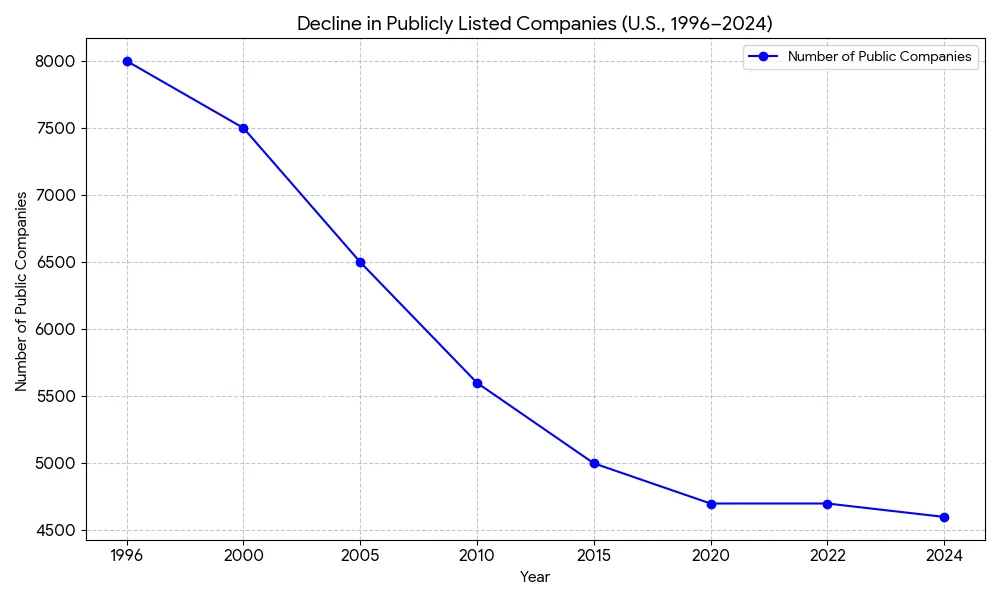
As public listings declined, venture capital and private equity stepped in sooner. Companies now raise most of their funding while staying private. This shift changed the outcome for retail investors. By the time stocks reach public markets, much of the growth is already priced in. That limits access to early-stage deals and pushes individuals to the end of the value cycle.
Private credit followed the same path. Companies now rely more on private lenders than public bonds, keeping capital activity behind closed doors.
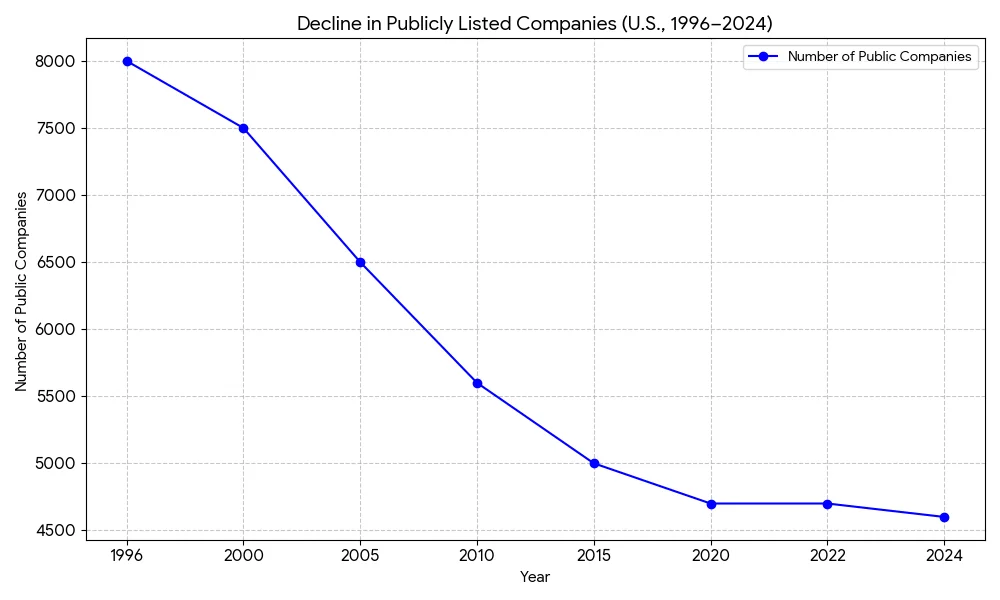
That's why private markets for retail matter today. The opportunity didn't vanish - it moved private. Only now are new models breaking access barriers and bringing private deals closer to everyday investors. The stories of companies like SpaceX and Stripe illustrate how much value is created before public listings.
Traditional Barriers That Block Retail Investors
For a long time, retail investors were locked out of private deals - not because the system was unfair, but because it was built for a different audience. Understanding why retail couldn't access private deals before tokenization requires looking at the rules, costs, and operations that shaped private markets for decades.
Regulatory Barriers
Private investments were designed with strong investor protection in mind. Laws focused on suitability, risk tolerance, and financial resilience. The idea was simple: private deals are complex, risky, and often illiquid. Regulators wanted to reduce the chance of large losses for individuals who might not fully understand those risks.
Global bodies like the International Organization of Securities Commissions (IOSCO) have long emphasized protecting retail investors from products that lack transparency or exit options.
In Europe, investor categorization rules further limited access. As outlined by ESMA, different investor groups face different access rights based on experience and resources.
Capital Barriers
Money was another major hurdle. Most private funds required minimum investments ranging from hundreds of thousands to millions of dollars. On top of that came capital calls, where investors had to commit more money over time.
For smaller portfolios, this made diversification impossible. One private deal could consume an entire investment budget, increasing risk instead of managing it. As a result, retail access to private deals was structurally impractical.
Operational Barriers
Even when capital and eligibility were met, operations stood in the way. Custody rules were complex. Transfers were restricted. Ownership records were slow and manual. Fund structures relied on layered partnerships that were hard to understand and harder to exit.
Together, these issues blocked access to early-stage deals and kept private markets closed to most individuals. That's why today's push toward breaking access barriers isn't about changing demand - it's about fixing the structure that once made access impossible.
The Turning Point: Technology + Regulation Converge (2020–2026)
Until recently, how retail investors enter private markets wasn't a question anyone could easily answer. But a combination of modern technology and updated rules changed that.
At the heart of this shift are new digital systems that make old processes faster and cheaper. Fintech rails now support digital KYC and AML checks that take minutes instead of weeks. API-based compliance tools help platforms monitor rules in real time. Meanwhile, platforms are building infrastructure for fractional ownership, allowing individuals to invest in parts of deals that once required huge sums.
Regulators are also catching up. The European Commission's ELTIF 2.0 framework is designed to widen access and simplify investment rules, making it easier for individuals to participate in longer-term growth markets. At the same time, the OECD highlights how digital finance can boost inclusion by lowering costs and expanding choice.
All of this is part of a broader push toward market democratization. New tech means platforms can handle tasks that once required armies of specialists. Updated rules mean individuals can now access opportunities without jumping through complex hoops.
Together, these changes are breaking access barriers that once kept private markets out of reach. Today, everyday investors can finally participate in the early stages of growth that were traditionally reserved for institutions and deep pockets.
Breaking Down the Barriers: Modern Solutions
| Barrier Category | Traditional Challenges | Modern Solutions | Impact on Retail Investors |
|---|---|---|---|
| Capital | High minimum buy-ins ($250k - $1M) and unpredictable capital calls. | Tokenization and fractional ownership platforms like IPO Genie. | Lower entry costs and better portfolio diversification for small amounts. |
| Regulatory | Strict accredited investor rules and complex suitability requirements. | Updated frameworks like ELTIF 2.0 and digital API-based compliance tools. | Easier access to long-term markets and simplified legal participation. |
| Operational | Manual ownership records, slow transfers, and complex custody rules. | Blockchain-based ownership and smart contracts for automated settlement. | Faster processing times and reduced administrative friction. |
| Access & Discovery | Closed institutional networks and limited visibility of available deals. | AI-supported discovery tools and tiered participation levels (Bronze to Platinum). | Clear pathways to find and join deals based on experience rather than wealth. |
Tokenization: How It Changes Access
Tokenization is the practical reason private markets are opening up. At its core, it explains how tokenization opens private markets without changing the underlying investment rules.
What Tokenization Actually Means
Tokenization does not mean creating unregulated assets. It means representing legal ownership on a blockchain. Tokenized fund shares still follow securities laws and investor protections. The difference is how ownership is recorded and managed. According to the Bank for International Settlements, tokenization improves efficiency by placing verified ownership records on shared digital ledgers.
Fractional Ownership at Scale
Once ownership is digital, investments can be divided into smaller units. This enables private deals fractional ownership, allowing retail investors to participate with lower ticket sizes. Instead of committing all capital to one deal, individuals gain fractional access across multiple opportunities. Boston Consulting Group notes that tokenization supports continuous onboarding, rather than fixed fund vintages, making portfolios more flexible.
Faster Settlement & Better Transparency
Tokenization also simplifies operations. Smart contracts automate settlement. Cap tables update in real time. Administrative friction drops. The result is clearer ownership, faster processing, and fewer manual steps - key reasons tokenization is now central to expanding access in private markets.
Identity Wallets & Access Tiers: A New Gatekeeping Model
A key reason how retail investors enter private markets has changed is the rise of digital identity systems. Older models relied on fixed rules and broad restrictions. New models use identity wallet access tiers to manage access in a more practical way.
Identity wallets allow investors to verify who they are, complete compliance checks, and store permissions digitally. The World Economic Forum highlights how digital identity can make financial access safer and easier to manage. In Europe, the EBSI digital identity framework shows how verified credentials can be used across platforms while following local rules.
With this setup, platforms can offer private deals access tiers, often labeled from Bronze to Platinum. Each tier reflects identity checks, experience, and risk suitability - not just wealth. This supports investment inclusivity while keeping guardrails in place.
Jurisdiction-aware permissions ensure investors only see deals allowed in their region. Together, identity wallets and access tiers are breaking access barriers and making private markets more accessible to retail investors.
How Retail Investors Access Early-Stage Deals in Practice (2026): The IPO Genie Model
For decades, early-stage and pre-IPO deals were simply not reachable for most individuals. Retail access to private deals was blocked by large minimum investments, closed institutional circles, and rigid investor classifications. Even investors with a strong interest had no practical way to discover or participate in these opportunities early.
IPO Genie is designed around this exact problem. It does not remove compliance or risk controls. Instead, it creates a structured pathway that allows retail investors to access early-stage exposure without relying on informal networks or large upfront capital. The platform focuses on controlled entry, clear eligibility, and defined participation rights, making access to early-stage deals possible in practice.

How IPO Genie Opens Early Access: The Core Mechanism
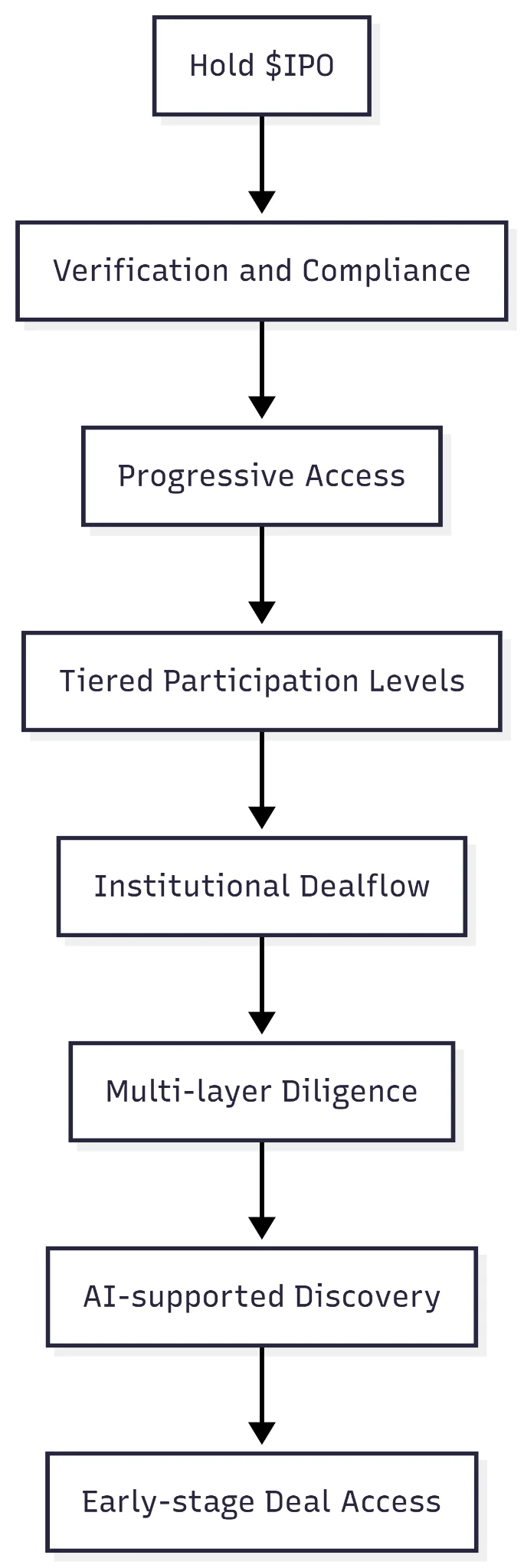
Access starts with holding $IPO, which acts as the entry point to the platform. Retail investors go through built-in verification and compliance checks, allowing access to expand while staying within clear rules. Once verified, access is no longer a simple yes or no. It becomes progressive.
This progression is managed through tiered participation levels. The whitepaper clearly outlines access tiers where higher $IPO holdings unlock broader deal visibility, earlier access, and larger participation limits. Instead of a one-time filter, access adjusts over time with defined boundaries that are easy to understand.
Early-stage opportunities come from institutional deal flow, sourced through venture firms, hedge funds, and private networks. Each opportunity goes through a multi-layer diligence process before being listed. IPO Genie also uses AI-supported discovery tools to highlight relevant deals and flag potential risks, helping investors focus on higher-quality opportunities instead of sorting through noise.
This is how retail investors access early-stage opportunities in 2026 - through gated, rules-based systems rather than personal connections.
Platform Features That Support Early-Stage Participation
- Fractional participation: Private deals fractional ownership allows retail investors to invest smaller amounts instead of committing large sums to a single deal
- Portfolio diversification: Smaller allocations make it easier to spread capital across multiple private opportunities
- Clear access rules: Eligibility is defined through visible tiers, scores, and wallet status
- Transparent participation limits: Investors know upfront how much they can allocate and when
- On-chain visibility: On-chain tracking shows access rights and participation status in real time
- Inclusive by design: These features support investment inclusivity while keeping structure and risk controls intact
How Users Join IPO Genie In Practice (Step-By-Step)
In practice, retail investors follow a clear path:
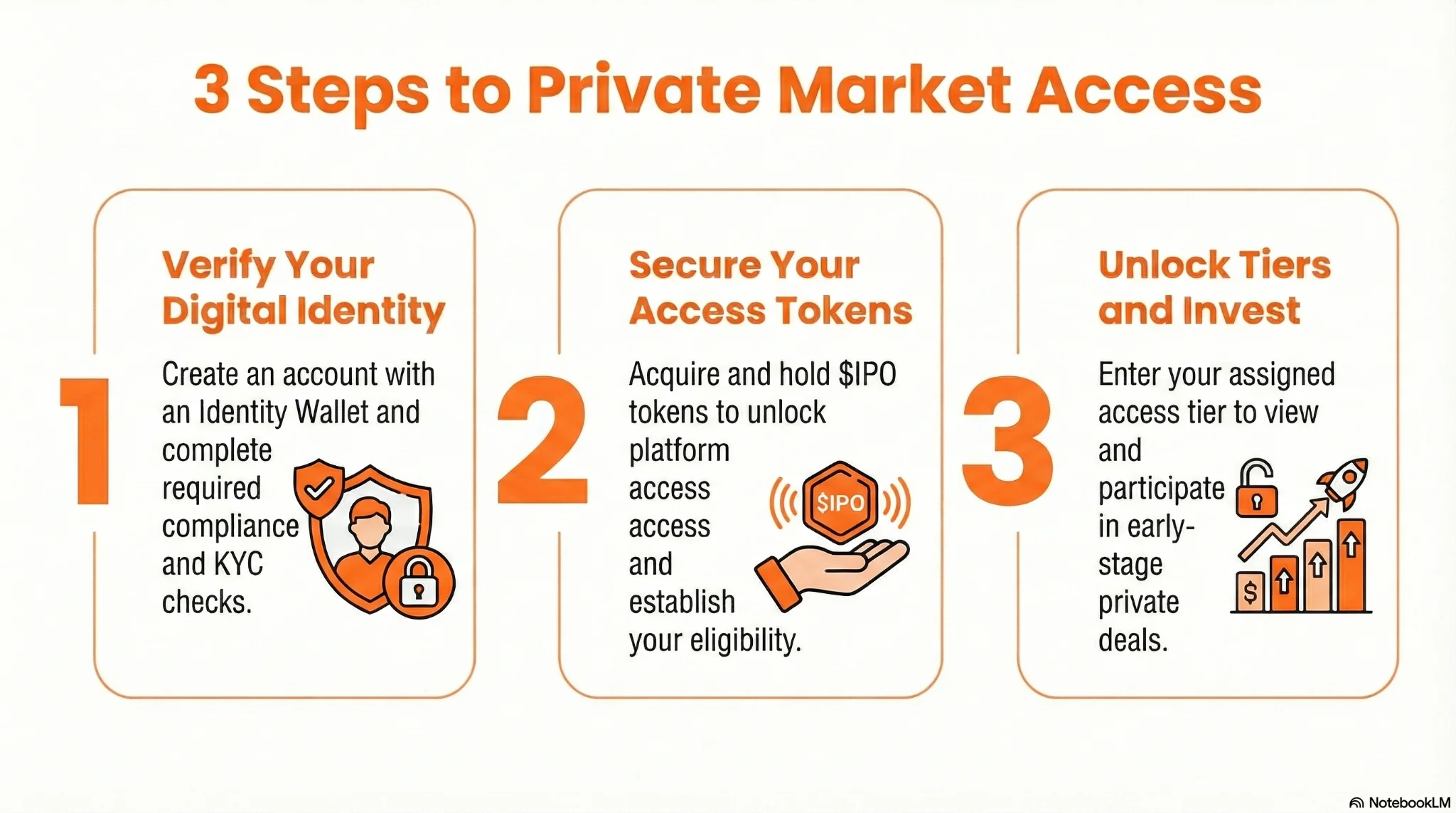
- Create an account on the IPO Genie platform with Identity Wallet
- Complete verification and compliance checks as required
- Acquire and hold the $IPO token, which unlocks platform access
- Enter the appropriate access tier based on $IPO holdings
- View and participate in early-stage deals according to tier permissions
This step-by-step flow shows how retail investors enter private markets in 2026. Access is no longer closed or informal. It is structured, progressive, and aligned with democratizing private investing.

Join the IPO Genie presale now and start your journey into private market investing.
Investment Inclusivity vs Investor Protection
Opening private markets to more people doesn't mean removing risk. Investment inclusivity and market democratization are about fair access, not risk-free investing. Private deals can still be complex, illiquid, and long-term, which is why safeguards remain important. Learning to evaluate opportunities like a professional is essential before committing capital.
Regulators have made this clear. In 2025, the SEC Investor Advisory Committee stressed that as retail access expands, investors must receive clear disclosures and better education about risks. The UK's FCA echoes this view, warning that private investments require careful understanding and appropriate limits.
This balance is now shaping private markets for retail. Access is growing, but it is paired with suitability checks, clear risk explanations, and controlled participation. Platforms are expected to guide investors, not overwhelm them.
IPO Genie fits into this shift by using structured access, tiered participation, and identity checks rather than open entry. The aim is to widen access while keeping expectations realistic.
The message is simple: inclusion works best when protection comes first. The future of private markets depends on opening doors carefully, not throwing them wide open.
The Barrier Isn't Gone; It's Smarter
Private markets are no longer reserved only for institutions, but they are not wide open either. What has changed is how access works. Today, retail access to private deals is earned through structured systems, clear rules, and verified participation. Technology, tokenization, and identity-based access have replaced informal networks and high entry walls.
Platforms like IPO Genie show how this shift works in practice. By combining tiered access, fractional participation, and transparency, they make private deals fractional ownership possible without removing safeguards. The result is a smarter model of inclusion.
In 2026 and beyond, breaking access barriers doesn't mean removing responsibility. It means giving retail investors real access, paired with structure, clarity, and accountability.
Frequently Asked Questions
Q: What is retail access to private deals?
Retail access to private deals means everyday investors can participate in private investments like early-stage startups, pre-IPO companies, or private lending - opportunities that were previously limited to large institutions and accredited investors.
Q: Why couldn't retail investors access private deals before?
Traditional barriers included high minimum investments ($250K-$1M), strict accredited investor requirements, complex custody rules, and closed institutional networks. The system was built for institutions, not individuals.
Q: How does tokenization help retail investors?
Tokenization represents legal ownership on a blockchain, enabling fractional ownership. This means investments can be divided into smaller units, allowing retail investors to participate with lower ticket sizes while still following securities laws.
Q: Is investing in private deals risky?
Yes, private investments remain high-risk, illiquid, and long-term. However, modern platforms pair access with suitability checks, clear risk disclosures, and controlled participation to help investors make informed decisions.
Q: How do I start participating in private-deal workflows through IPO Genie?
Create an account, complete verification, acquire $IPO tokens to unlock platform access, and participate in deals according to your tier level. The more $IPO you hold, the broader your access to early-stage opportunities.
Disclaimer
This article is for informational and educational purposes only and should not be considered financial or investment advice. Cryptocurrency markets are volatile; readers should conduct their own research before making any financial decisions.