
The Evolution of Incentive Alignment
Token vesting primarily prevents early stakeholders from dumping allocations at unlock, while also supporting participant retention, supply management, and incentive alignment. In early decentralized finance, projects frequently suffered from liquidity shocks when early participants liquidated allocations at the Token Generation Event (TGE). Vesting addresses this through gradual asset distribution.
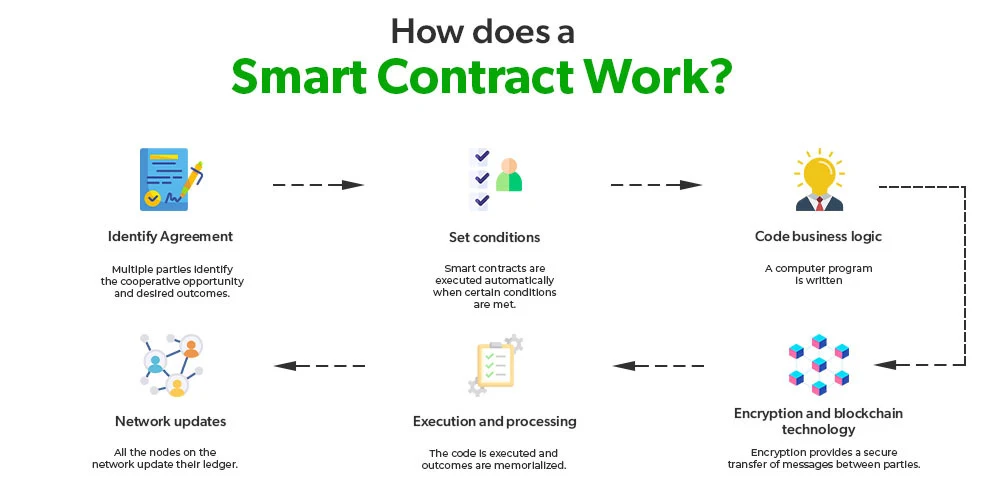
Moving from traditional equity vesting to smart contracts changes how execution is enforced. Traditional models rely on manual HR processes and legal filings. In contrast, blockchain-based vesting utilizes code-enforced schedules. While this automates execution, human risk remains through contract design choices, admin access, oracles, and governance oversight.
According to research from ERC20Token.app, this trustless execution is a paradigm shift for Web3. By locking tokens in a transparent escrow contract, projects can prove to their community and investors that the team cannot exit prematurely. Institutional investors don't want to take a team's word for it anymore, they want to check the contract themselves, and vesting built on-chain gives them exactly that.
Cliff Vesting Enforces Minimum Commitment
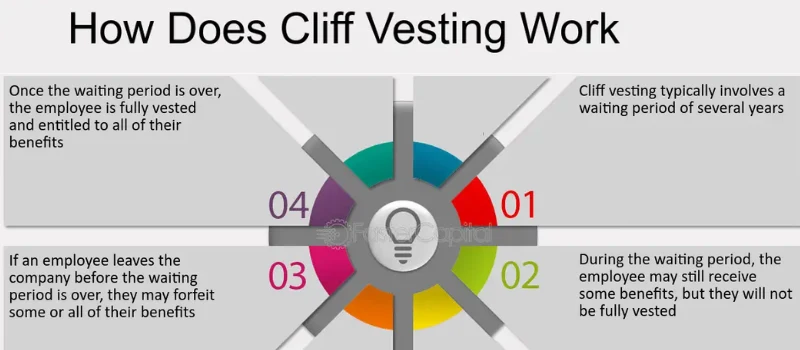
Cliff vesting introduces a mandatory lock-up period before any tokens are released to the beneficiary. The cliff works as a filter: only people who stick around for a meaningful stretch get rewarded If a team member leaves before the cliff period expires, they forfeit their entire allocation, which helps filter out opportunistic participants who might join a project solely for short-term gains.
While a 12-month cliff is commonly referenced for team allocations, projects frequently adjust this lock-up duration based on their specific roadmap and tokenomics structure. A standard 12-month cliff on a 4-year schedule means that exactly 25% of the tokens unlock on the first anniversary, followed by a linear release for the remaining 75%. So a team member can't touch a single token before that one-year mark.
A notable case study is the QONE model, which utilized a 6-month cliff for team and advisor allocations. By choosing 6 months rather than the standard year, the project signaled a slightly more aggressive but still disciplined alignment strategy. This specific choice, audited by Fairyproof, demonstrates how projects use the cliff parameter to balance team liquidity needs with the market's demand for long-term stability.
Linear Vesting Smooths Out Market Volatility
Linear vesting distributes tokens at a constant, predictable rate over the duration of the vesting period. The mechanics are straightforward: the total allocation is divided by the total duration (in seconds, blocks, or months) to determine the release rate. Projects favor it for the simplicity and the steady, predictable dilution it introduces to the market.
There is a technical nuance between per-second linear vesting and periodic tranches. OpenZeppelin's standard VestingWallet implementation uses per-second granularity, calculating the vested amount at the exact moment of a claim. Compare that to monthly or quarterly tranches, which can create sell walls when many users unlock on the same date.
Market analysts often discuss daily granularity as a superior tool for predictable dilution. When tokens vest on a per-second schedule, unlock distribution is spread smoothly across the entire timeline rather than accumulating on specific dates. That spreads potential sell pressure across the whole timeline instead of concentrating it on a single day.
Milestone-Based Vesting Drives Performance-Based Distribution
Moving beyond simple time-based triggers, milestone-based vesting ties token unlocks to specific project achievements. These milestones can include product launches, reaching Total Value Locked (TVL) targets, or completing technical audits. This model ensures that tokens are only distributed when value has been demonstrably added to the ecosystem.
The primary challenge with milestone-based vesting is the verification problem. Because smart contracts cannot natively query off-chain achievements, these systems rely on external triggers such as decentralized oracles, multi-signature committees, or DAO governance votes.
A related pattern is seen in Decentraland’s DAO grants program, which uses milestone-based treasury disbursements rather than standard equity-style vesting. Funds are released in periodic tranches contingent upon community review of submitted progress reports, allowing the DAO to pause funding if deliverables stall.
Smart Contract Architecture & Implementation
OpenZeppelin's VestingWallet serves as a widely used reference implementation. It holds funds for a beneficiary and releases them on a linear schedule. While an excellent starting point, projects often need custom modifications for multi-beneficiary scalability, custom cliff mechanics, or revocability
However, as projects scale, they often require more efficient models. The QONE project, for example, implemented a Merkle-tree-based claiming system. Instead of deploying a separate contract for every single user, which would be prohibitively expensive in terms of gas, a single contract holds the entire pool of tokens. Users provide a cryptographic proof (a Merkle proof) to claim their specific allocation. This allows a project to manage thousands of beneficiaries with a single contract deployment.
To calculate withdrawable tokens accurately, smart contracts differentiate between the total vested amount and the currently claimable balance by accounting for start times, cliffs, and previously claimed tokens:
$\text{Vested Amount} = \text{Total Allocation} \times \frac{\text{Current Timestamp} - \text{Start Timestamp}}{\text{Vesting Duration}}$ $\text{Claimable Amount} = \text{Vested Amount} - \text{Already Claimed Amount}$ |
This formula ensures that any initial unlock at the Token Generation Event is accounted for, while the remaining tokens are distributed strictly according to the time elapsed since the vesting start or cliff expiry.
Security, Compliance, and the Role of Vaults
Vesting contracts frequently hold substantial treasury allocations over extended durations, making technical security essential. While modern Solidity compilers (v0.8.0+) prevent standard integer overflow by default, audits focus heavily on access control vulnerabilities, calculation errors, revocation bugs, and token-transfer compatibility issues.
Regulatory consideration around token custody and distribution structures remains an evolving area. While programmatic escrow vaults aim to demonstrate decentralized asset lockups, projects must consult qualified legal counsel regarding specific SEC or jurisdiction-specific custody obligations rather than relying solely on private protocol memos.
Administrative safeguards also play a role in maintaining project health. Many advanced vesting systems include the ability to pause or resume vesting, often controlled by a multi-sig wallet. Decentraland’s model, for instance, allows for monitoring project health and stopping distributions if a contributor becomes inactive or harmful to the project. That revocability is a key tool for protecting the token-holding community's long-term interests.
The Future of Programmatic Tokenomics
Emerging concepts in tokenomics include market-condition-based vesting and cross-chain claim mechanics. While these remain experimental rather than established standards, they demonstrate a move toward dynamic distribution models.
Implementing clear, on-chain vesting mechanics demonstrates a commitment to long-term alignment and transparent supply management. For developers and founders, selecting the appropriate vesting schedule is a foundational design choice in protocol architecture.
Note: The schedule below is illustrative and serves as a common framework rather than a strict industry rule.
Stakeholder Category | Typical TGE Unlock | Cliff Period | Linear Vesting Duration |
Founders / Core Team | 0% | 12 Months | 36 - 48 Months |
Seed Investors | 5% - 10% | 6 - 12 Months | 18 - 24 Months |
Advisors | 5% | 6 Months | 12 - 24 Months |
Public Sale (IDO) | 20% - 50% | None | 3 - 12 Months |
Ecosystem / Treasury | 0% | None | 48 - 60 Months |
Practical Takeaways
- Prioritize Transparency: Always use on-chain, verifiable contracts rather than off-chain promises to build community trust.
- Audit Everything: Vesting contracts are high-value targets; never deploy without a professional security review.
- Align Schedules: Team schedules should generally support long-term alignment and be evaluated in conjunction with investor unlock timelines.
- Consider Scalability: For large-scale distributions, use Merkle-tree models to save on gas costs.